Google AI Mode Is Now the Default: What It Means When Patients Search 'Dentist Near Me'
Pete Johnson
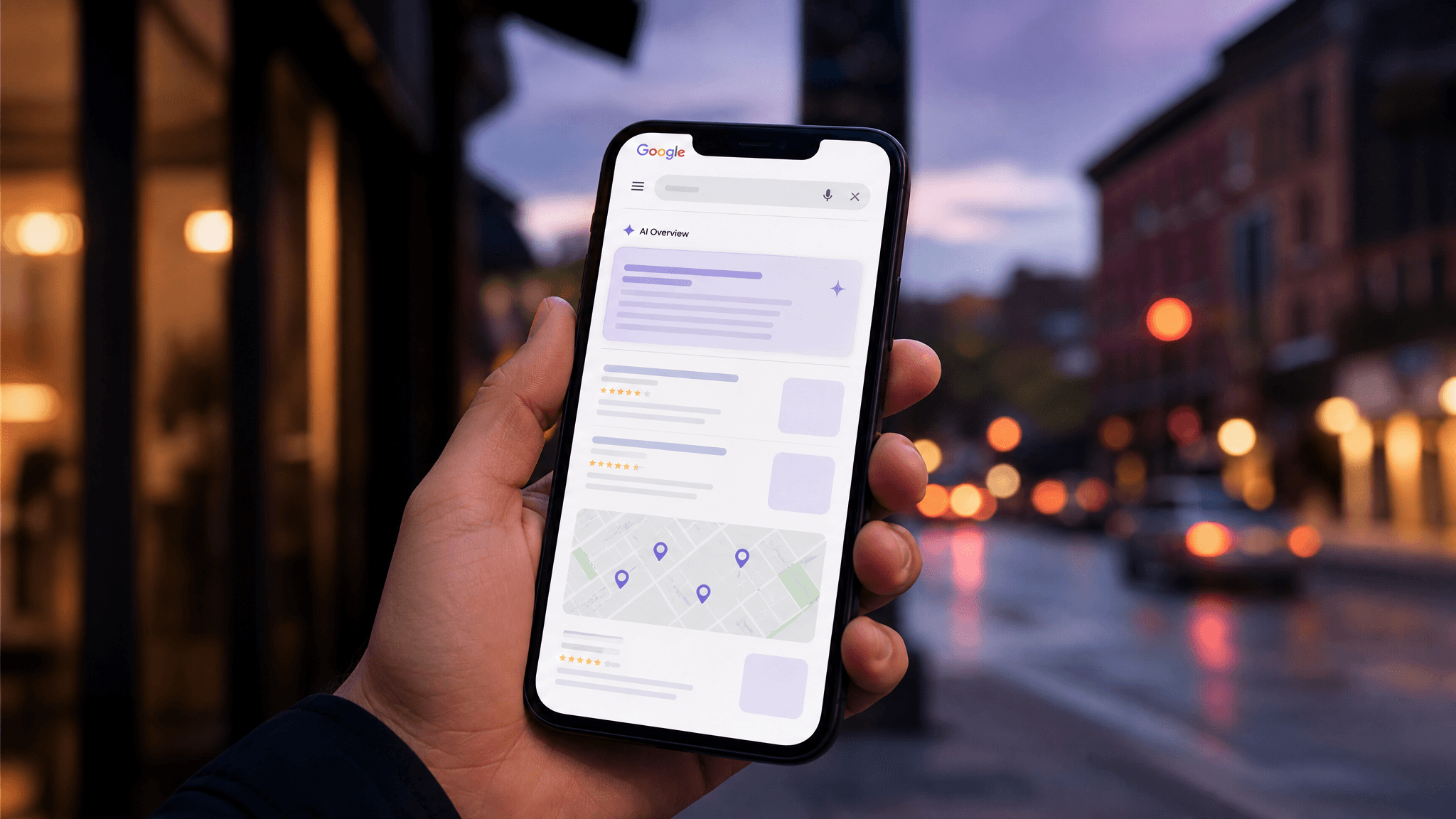
On May 19, Google flipped a switch that changes the math for every dental practice in the country.
At Google I/O, they announced that AI Mode is now the global default for Search. Not a tab. Not an opt-in. The default. The search box itself got rebuilt for conversational prompts, with persistent "information agents" rolling out over the summer and a new Gemini 3.5 Flash model under the hood.
Google called it the biggest change to Search in 25 years. For once, the hype is earned.
Here's why you should care more than most people telling you to care: the early local-search data is brutal. When a patient searches "dentist near me" inside AI Mode, the answer they get is built from a much smaller set of practices than the old map pack showed. A lot of offices that rank today are about to fall out of view, and most won't notice until the new-patient calls dry up.
Let me walk you through what actually changed, what the data says, and the two things you need handled before this fully rolls out.
What "AI Mode by default" actually means for dentist near-me search
For years, a local search looked the same. You typed "dentist near me," Google showed you a 3-pack of map listings with stars and a call button, and you picked one. Simple. Predictable. Every local-SEO playbook, mine included, was built around winning a spot in that pack.
AI Mode breaks that pattern.
Instead of a list of links, the patient gets a composed answer. They can ask follow-ups in plain language, the way they already talk to ChatGPT. "Find a sedation dentist near me who takes Delta Dental and can see me this week." AI Mode reads that, pulls from whatever signals it trusts, and hands back a recommendation or two. Not ten options. A short answer.
And the persistent agents Google is shipping over summer 2026 take it a step further. They don't just answer. They act. The patient asks the agent to book, and the agent goes and books.
That's the part that should make you sit up. The search result is no longer a destination. It's a decision.
The number that should scare you: two-thirds of practices disappear
This is where it gets real.
Late-May research from Joy Hawkins and the Sterling Sky team looked at the new AI Local Pack and found it surfaces only about 32% of the businesses the old 3-pack did.
Read that again. The AI answer shows roughly a third of the practices that used to appear. So about two-thirds of the offices ranking in the map pack today simply don't make the cut in the AI version.
That's not a small reshuffling of positions 1 through 3. That's a cliff. If you were comfortably in the pack at position 2 or 3, that was good enough for years. In the AI Local Pack, "good enough" might mean you're invisible.
The same research flagged a second change that's easy to miss and expensive to ignore: the classic click-to-call button is being removed inside AI results. The one-tap "call now" that drove a huge share of your phone volume from mobile search? Gone from the AI answer. The patient now goes through the AI's flow, not straight to your front desk.
So two things are happening at once. Fewer practices get shown, and the ones that do get shown lose the easiest path a patient had to call them.
I wrote about the broader version of this shift in the Google local-search changes hitting dental practices in 2026. This I/O announcement is that trend going from "coming soon" to "it's the default now."
A baseline worth knowing (and dating honestly)
Whenever AI search comes up, somebody cites the Whitespark study showing AI Overviews appearing on local searches. It's a good study. I'll point you to it: the Whitespark case study on AI Overviews in local search found AI Overviews triggering on roughly 15% of local-intent queries, dentists included.
But be honest about the date. That study is from May 2025. It's a baseline, not a current reading. It told us a year ago that AI was already creeping into local results when most agencies were still pretending it wasn't.
What changed on May 19 is that we're no longer talking about AI showing up on 15% of queries as an overlay. AI Mode is the default surface for the search itself. The 2025 number was the warning shot. The 2026 default is the thing it was warning about.
The 1-second booking SLA nobody is talking about yet
Here's the angle I have not seen anyone else lay out, and it's the one I'd lose sleep over if I owned a practice.
When agentic booking rolls out this summer, the AI doesn't just recommend a practice. It tries to book the appointment on the patient's behalf. To do that, it pings your scheduling system and asks a simple question: do you have a real, bookable slot right now?
If your system answers fast with an actual open time, you win the patient. If it's slow, or it kicks back a "call the office to schedule" message, or it makes the agent wait, the AI does the rational thing. It moves on to the next practice that can answer instantly.
Call it the 1-second booking SLA. I'm making up the term, not the dynamic. As booking agents go mainstream, real-time online scheduling stops being a nice-to-have and becomes the difference between getting the patient and never knowing they existed. The agent will not sit on hold. It will not fill out your contact form and wait for a callback. It hands the patient to whoever returns a bookable time slot in under a second.
This quietly rewrites the priority list for a lot of practices. A "request an appointment" form that drops into someone's inbox was fine when a human was doing the searching and was willing to wait. An AI agent doing the booking has no patience and a dozen other practices to try.
So if your online scheduling can't return a live, bookable slot fast, that's no longer a back-burner IT project. It's the thing standing between you and the patients AI Mode is about to start routing.
What to actually do about it
Two things become table stakes the moment AI Mode is the default. Getting cited in the AI answer, and being instantly bookable. Everything below ladders up to one or the other.
Get into the answer (AEO)
If the AI only shows a third of practices, your whole job is making sure you're in that third. That's answer engine optimization, and it runs on the boring signals most dental sites still botch:
- Explicit service pages. "Comprehensive family care" tells an AI nothing. "Sedation dentistry," "dental implants," "emergency dentist," each on its own clear page, tells it exactly what you do and who you're for.
- Clean, consistent NAP. Your name, address, and phone number need to match across your site, your Google Business Profile, and every directory. Contradictions teach the AI not to trust your listing.
- Reviews that say something. "Great staff" is noise. "They got me in same-day for a cracked molar and my insurance covered it" is a signal the AI can actually use. Build a review process that pulls out specifics.
- Insurance and financing, in plain text. Patients ask AI the practical stuff. Whether you take Delta Dental. Whether you do payment plans. If your site doesn't answer, the AI guesses or skips you.
- Structured data. LocalBusiness schema isn't magic, but it makes your details machine-readable, and machine-readable is the whole game now.
None of this is new advice. It's the same foundation I broke down for showing up when patients ask ChatGPT instead of Google. What changed is the stakes. When the answer showed ten practices, a weak signal cost you a few positions. When it shows three, a weak signal costs you the patient. If you want the full playbook, the Dental AEO Guide is the long version with the schema, the content architecture, and a 90-day plan.
Make sure an agent can book you in one second
This is the part most practices have not connected to AI yet, so doing it now is a genuine edge.
- Audit your online scheduler. Open it like a patient and time how long it takes to surface a real, bookable slot. If the answer is "you can't book online, just request a callback," that's your weak point.
- Make live availability actually live. The agent needs to see open times and grab one. A form that lands in an inbox doesn't count.
- Treat speed as a feature. Sub-second matters because the agent is comparing you to the next practice in real time, and it will pick whoever responds first.
Get those two things right, citation and instant booking, and you're built for how patients are about to search. The deeper version of where agents take this is in what agentic AI means for dental marketing. The short version is that the agent is the new front desk, and it has zero patience.
The bottom line
May 19 wasn't an incremental update. Google made AI the default front door to search and, by the early local data, started showing patients about a third of the practices they used to see. The easy call button is leaving the AI answer, and a booking agent that won't wait is on its way in.
The practices that get cited in the AI answer and can be booked in a second are going to look like they got lucky this summer. They didn't. They just fixed the boring stuff before everyone else realized it was now the whole game.
Two-thirds of your competitors are about to fall out of view. You can be in the third that doesn't. Start with the two levers above, and start this week.
Want to see whether your practice shows up in AI Mode today, and whether an agent could actually book you? That's exactly the kind of teardown we run at Lasso MD. Book a discovery call and I'll run one live, on the house.
Sources
- The next chapter of Search: AI Mode by default, Google
- How to use Google's new AI agents to go beyond your standard searches, TechCrunch
- Google Map Pack vs. AI Overviews: local pack visibility drops, Search Engine Roundtable
- Case Study: The Prevalence of AI Overviews in Local Search (May 2025 baseline), Whitespark
Keep reading
All articlesWant to see this in action for your practice?
Book a free discovery call and I'll run a competitive analysis. On the house.
Book a Discovery Call