How to Remove Negative Google Reviews from Your Dental Practice
Pete Johnson
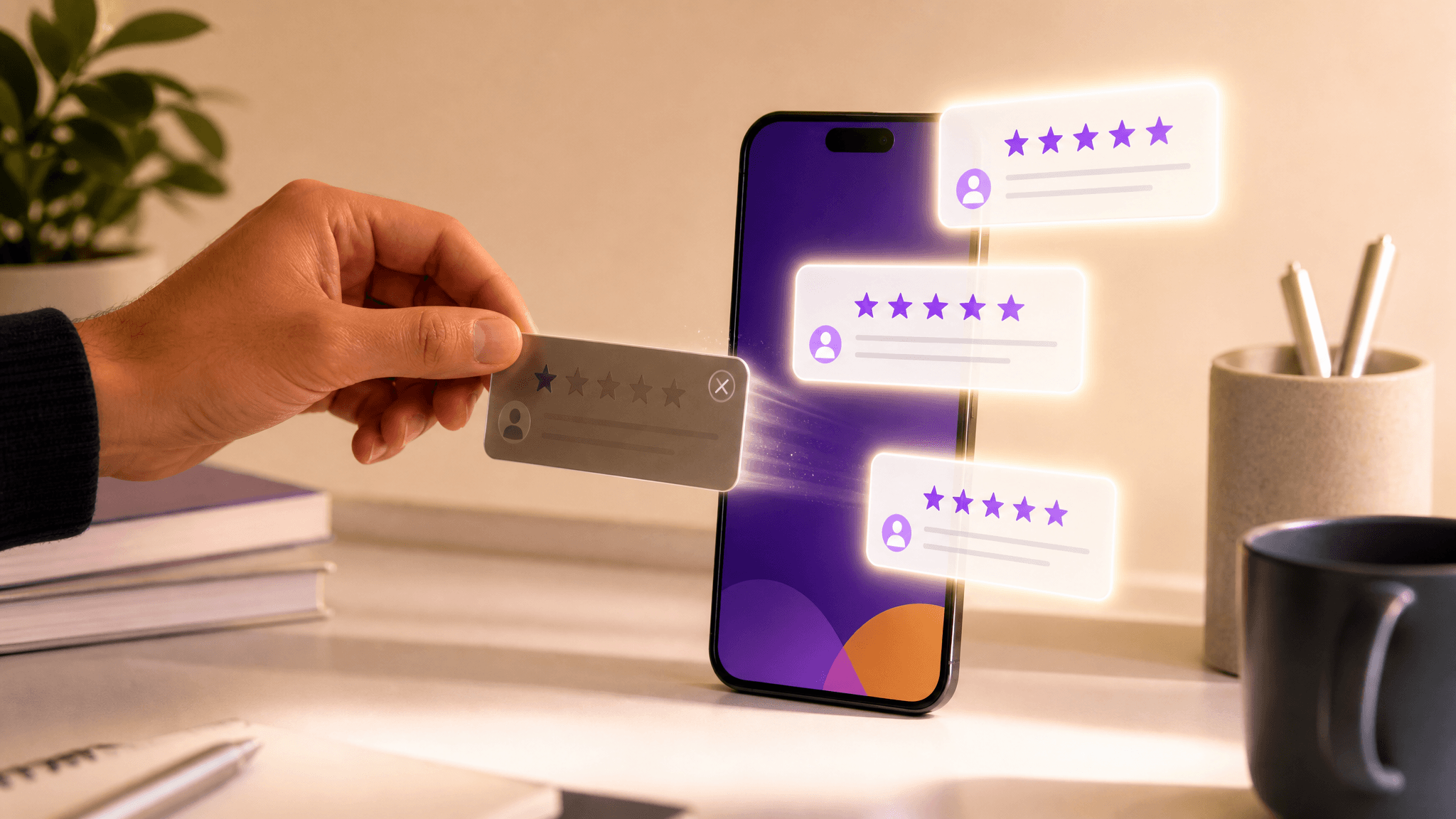
A practice came to me last month with a 4.5 rating, 240 reviews, and three negative reviews they were convinced were killing their conversion rate. We ran the three reviews through RevGon's qualification process. Two came back as clear violations of Google's content policies: one from a former employee, one with disclosed patient information. Both were gone inside two weeks. The third was a real patient who had a real bad day, and we handled that the right way (a professional public response, a private follow-up call, an operational fix).
Cost: $798. Result: a measurable bump in conversion rate the following month.
That's the model I want to talk about, because it's the first approach to negative-review removal I've seen that actually pencils out for dental practices. Most practice owners assume negative reviews are permanent. They aren't. Roughly a quarter of the negative reviews I see across dental Google Business Profiles violate one of Google's six content policies and can be removed if you file the case correctly. And there's now a performance-based way to do it.
Here's the playbook.
Why Bogus Reviews Cost Real Revenue
The stat I quote every time this comes up: a one-star increase in average rating drives a 5-9% revenue increase, according to Michael Luca's research at Harvard Business School. The inverse is just as true. A one-star drop costs real money every month.
BrightLocal's annual consumer survey consistently shows 90%+ of patients read reviews before booking healthcare. A 4.7 rating with 250 reviews converts at meaningfully higher rates than a 4.3 with 250 reviews in the same market. The difference between those two ratings is often a handful of unfair reviews that should never have been there in the first place.
If your practice has policy-violating reviews sitting on its profile, you're paying for them in lost patients every month. They're also dragging down your Local Pack ranking. Reviews are roughly a quarter of the weight in Google's local algorithm.
That's the economic case. A single $399 removal that lifts a 4.4 rating to a 4.6 in a market where the average new patient is worth $1,200-$3,000 in lifetime value pays for itself the first week.
The Six Google Policies That Make a Review Removable
Google enforces six content policies for reviews. A review can be removed only if it violates one of these:
-
Spam and fake content: Reviews from competitors, bots, or accounts with no real activity history. Generic copy-paste content posted across many businesses. Multiple reviews from one IP.
-
Off-topic content: Complaints that aren't about the patient's experience at your practice. The HVAC in the building. The parking lot in the same plaza. Political rants disguised as reviews.
-
Conflict of interest: Reviews from former employees, ex-staff at competing offices, family members of competitors, or anyone with a personal grudge unrelated to patient care. This is one of the most common removable categories I see in dental practices.
-
Personal information: Reviews that disclose someone's full name, address, insurance details, or specific medical information. This matters more for dental practices than most realize. Patients sometimes write things that violate their own privacy, and Google will remove those.
-
Hate speech and harassment: Slurs, threats, attacks based on protected categories.
-
Restricted content: Solicitation, adult content, illegal services.
If a review on your profile falls into one of these six buckets, it's a candidate for removal. If it doesn't, if it's just a real patient who had a real bad experience, you can't remove it. You can only respond well and try to learn from it.
This is the framework RevGon uses to qualify cases before they take them on.
RevGon: A Performance-Based Way to Remove Negative Reviews
I've started recommending RevGon to practices on this specific problem because they're the first service I've seen whose pricing aligns with the result, not the activity.
The model in plain terms:
- $399 per successfully removed review. $0 if they can't remove it. No retainer. No monthly minimum. You pay only when a review actually comes down.
- 70% of qualified cases removed in the first 30 days. That's their reported success rate based on cases they accept after qualification.
- 7-14 day decision window from Google on the typical case.
A handful of things make their approach work, and they're worth understanding even if you decide to file removals yourself.
They qualify cases before they take them
This is the part that separates RevGon from agencies that promise removal as a feature of a monthly retainer. Before they charge anything, they review the negative reviews on your profile and tell you which ones they believe will qualify under Google's six content categories, and which ones won't. If a review is a real patient complaint that doesn't violate policy, they say so upfront and decline the case.
That's why their success rate is meaningful. They're not pretending every bad review is removable. They're filtering for cases that have a credible legal/policy basis.
They use only Google's public reporting flow
No asking for login credentials to your Google Business Profile. No contacting the reviewer. No fake reviews to "balance things out." No tactics that put your GBP at risk of suspension.
This matters because the negative-review removal industry has a long history of shady operators. Some buy or threaten reviewers. Some use Google account-takeover tactics. Some bulk-flag reviews using fake reporter accounts, which can get your profile penalized when Google catches on. RevGon files cases the same way you would, using Google's documented policy reporting tool. The difference is they know how to write the case so Google's reviewers actually engage with it.
They escalate when Google initially denies
This is the gap that kills most DIY removal attempts. The first submission gets rejected, the practice owner assumes the review is unremovable, and the case dies. In reality, Google's first-pass review is often a fast pattern-match by a global reviewer looking at thousands of cases a day. A well-written escalation, referencing the specific policy, citing the language in the review that triggers it, often succeeds on the second try.
RevGon has that escalation path built into their process. It's where a meaningful share of their actual removals happen.
HIPAA-aware by design
They don't store the review text or any patient information associated with the case. For a dental practice, that's not a nice-to-have. That's table stakes. Storing review content that names a patient or references their care is itself a HIPAA exposure. It's surprisingly rare for review-management vendors to think about this. RevGon does.
What RevGon won't do for you
I want to be honest about scope, because nobody wins when practices have inflated expectations.
- They can't remove legitimate complaints. If a real patient writes that the hygienist was rude and the office felt rushed, that review is staying. RevGon will tell you that during qualification.
- They're not a reputation-management agency. They don't run review generation, respond to reviews on your behalf, or build review widgets for your site. They do one thing, removal, and they do it well.
- Google has the final say. Even a textbook policy violation can be denied if a reviewer pattern-matches incorrectly. The 70% number is real, but it's not 100%. The performance-based pricing exists because they're taking that risk on themselves.
I have no commercial relationship with RevGon. I'm writing about them because their model is the cleanest I've seen for solving a real problem dental practices are paying for every month, and because the structure of their pricing forces them to be honest about what's actually achievable.
DIY vs. Monthly Retainer vs. RevGon
Three ways practices handle this today. Here's the honest comparison:
DIY (the Google form). Free. You log into your Google Business Profile, click the three-dot menu on the offending review, choose "Report review," pick a category, submit. Typical turnaround: 7-14 days. Success rate when the practice owner does it themselves: low. Most submissions die at the first rejection because nobody escalates. Time cost: an hour or two per case, more if you actually pursue it. Best for: practices with clear-cut violations and the time to write a good case and follow up.
Monthly reputation-management retainer. $1,500-$3,000/month. You pay an agency on retainer that bundles review generation, response management, and "review monitoring," sometimes with removal included. The economics are mostly about activity, not result. If you're paying $24,000-$36,000 a year and haven't had a measurable rating improvement from removals, you're not buying removal. You're buying noise. This is the same logic I apply when I tell practices how to evaluate their marketing agency. Best for: large groups that genuinely use the bundled services.
RevGon (performance-based removal). $399 per successful removal. $0 if it doesn't come down. Pay only when a review is actually gone. Typical case turnaround: 7-14 days. Reported success rate: 70% on qualified cases. Best for: practices with 1-5 specific reviews they believe violate policy and want gone, who would rather pay per result than per month.
For a practice with three or four suspect reviews, RevGon's economics are dramatically better than a retainer. For a practice with no policy-violating reviews on its profile, it's also dramatically better, because the cost is zero.
What You Can't Remove (And What to Do Instead)
Be honest about which reviews actually violate policy and which are real patient complaints. RevGon won't take a case that doesn't qualify. Neither will Google.
For real, legitimate negative feedback:
-
Respond professionally and move it offline. Don't argue. Don't disclose any treatment or patient information (that's a HIPAA issue). Thank them for the feedback, apologize for the experience, give them a way to contact you directly. Every word is being read by future patients.
-
Talk to your team. A pattern of complaints about wait times, hygienist behavior, or front-desk experience isn't a marketing problem. It's an operational one. The marketing system can't outrun a bad patient experience forever.
-
Outpace it with volume and recency. Five fresh five-star reviews push one old one-star review off the visible page. Build the review engine I describe in the reviews playbook: automated requests two hours post-appointment, trained staff making in-person asks, weekly response cadence.
The goal isn't a perfect 5.0 rating. The goal is a strong, recent, high-volume review profile that drowns out the inevitable bad days.
How RevGon Fits Into a Real Reputation System
Removal is a tactic. The real strategy is what I covered in Why Reputation Management Is the Foundation of DSO Growth: treating review velocity, sentiment, and response cadence as core infrastructure.
A complete reputation system has four pieces:
- Generation: Automated review requests after every visit, plus trained in-person asks from staff
- Response: Every review gets a thoughtful, HIPAA-compliant reply within 24-48 hours
- Removal: Active monitoring for policy-violating reviews and a process for filing them. This is where RevGon plugs in
- Tracking: Velocity, sentiment, and rating tracked monthly as a leading indicator
Most practices have one or two of these. The practices winning their markets have all four. And they've stopped treating the removal layer as optional.
The Bottom Line
Negative reviews aren't necessarily permanent. About a quarter of the bad reviews I see on dental profiles violate Google's content policies and can be removed if the case is filed correctly. The other three quarters need to be answered well and outpaced with a real review engine.
What you shouldn't do: ignore them, respond defensively, or pay a retainer agency $30,000 a year for activity you can't measure.
What you should do: audit the negative reviews on your profile. Identify the ones that violate Google's six content policies. File them yourself if you have the time and the appetite for escalation, or send them to RevGon and pay only for the ones that actually come down. Outpace everything else with a strong review generation system.
If you want me to run a competitive analysis of your practice, including a look at which of your negative reviews are likely removable under Google's policies, book a discovery call. I'll tell you exactly where you stand, whether you work with us or not.
Go deeper: More from the Practice Growth hub: reviews, GBP optimization, attribution, and the signals that actually move new patient flow. Or catch me at an upcoming speaking event.
Sources
- RevGon: Google Review Removal for Dental Practices: Performance-based review removal service
- Google Review Content Policies: Google Business Profile Help
- Reviews, Reputation, and Revenue: The Case of Yelp.com: Michael Luca, Harvard Business School
- Local Consumer Review Survey: BrightLocal
- Local Search Ranking Factors: BrightLocal
- HIPAA Privacy Rule: U.S. Department of Health & Human Services
- Report a Review on Google: Google Business Profile Help
Keep reading
All articlesWant to see this in action for your practice?
Book a free discovery call and I'll run a competitive analysis. On the house.
Book a Discovery Call