What a High-Performing DSO Location Page Should Include
Pete Johnson
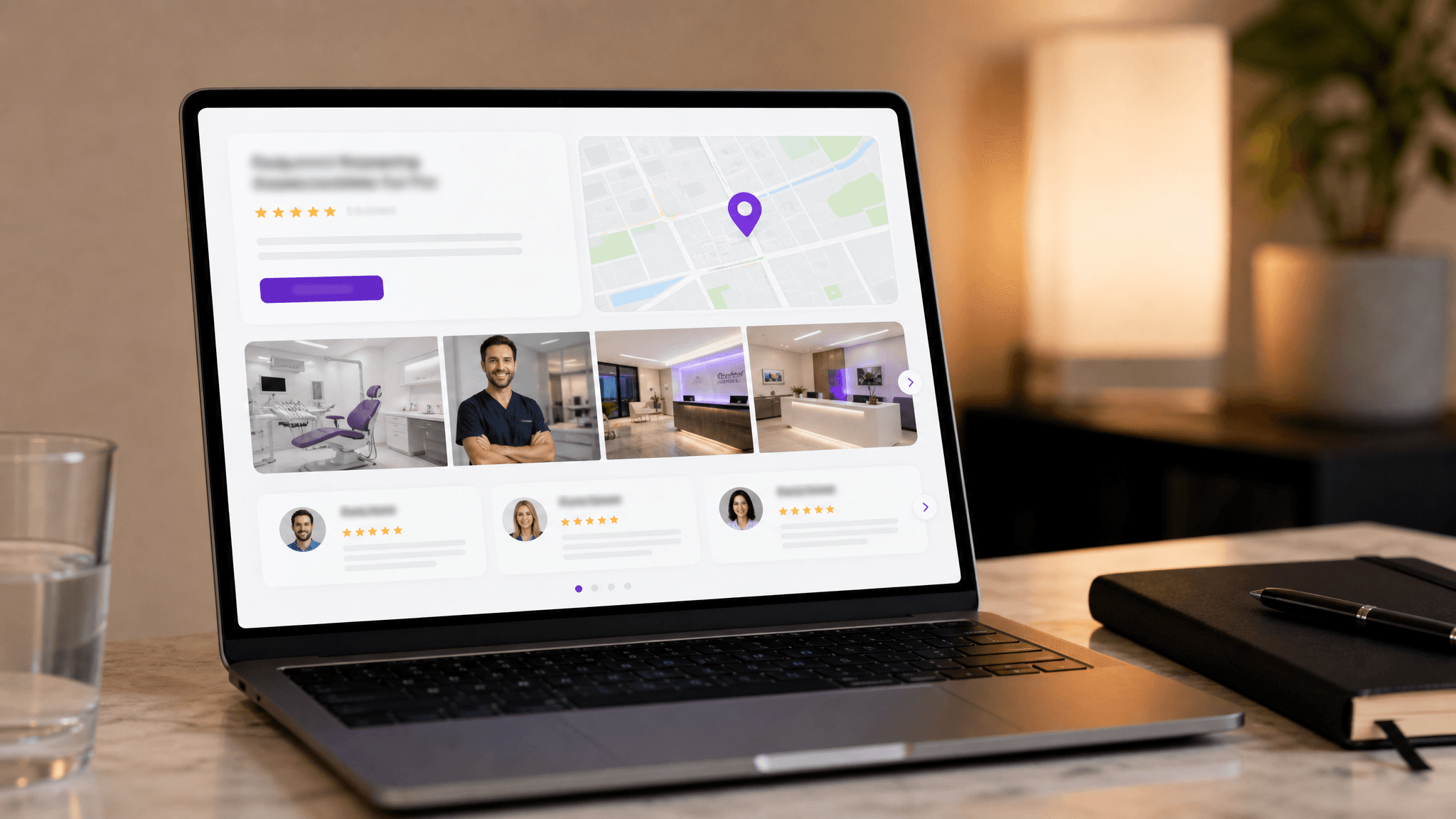
I've audited location pages across DSOs of every size, and the pattern is almost always the same: the pages exist, but they don't work.
An address. A phone number. Maybe a stock photo. A short block of generic copy that could apply to any dental office in any market. They satisfy the minimum requirement of having a page for each office. They do very little to support rankings, build trust, or convert interest into appointments.
That's a significant miss. Because high-intent local traffic is some of the most valuable traffic a DSO can earn. And location pages are the first meaningful page most of those visitors land on.
If you're spending on SEO or paid search and those channels underperform, start here.
What Weak Location Pages Actually Cost You
Here's the leverage point: improving one location page helps one office. Improving the location-page framework can improve dozens or hundreds of offices at once.
This is one of the highest-return optimization opportunities in multi-location dental marketing because it strengthens both visibility and conversion at the same time. Weak location pages force campaigns to work harder than they should. Traffic arrives with intent, then meets a page that doesn't answer the patient's questions or inspire action.
The local SEO guide for dentists covers the broader ranking framework. But location pages are where ranking meets the patient decision. And that's where conversion happens or doesn't.
What Every High-Performing DSO Location Page Needs
A Strong Local Value Proposition
The page should immediately tell the visitor what kind of office this is, who it serves, and why it's worth considering. Not in vague brand language. In clear, useful language.
Is the office family-focused? Known for implants, cosmetic care, same-day treatment, or accessible insurance options? What would matter to a patient comparing three practices in the same market? Answer that question in the first 100 words.
Complete and Friction-Free Core Information
This sounds obvious, but it's where a surprising number of pages fall short. Patients should be able to find the address, phone number, hours, online scheduling path, insurance information, and directions without hunting.
On mobile, this matters even more. If a patient can't call or book within seconds of landing, the page isn't doing its job. Check yours on your phone right now.
Real Provider Credibility
Patients don't choose "a location." They choose people.
Strong provider bios, headshots, credentials, areas of focus, and professional-but-approachable positioning all reduce hesitation. If the care team feels invisible, the page feels less trustworthy. Provider content isn't filler. It's one of the most important conversion assets on the page.
Unique Copy
This is essential for both SEO and trust. Search engines aren't impressed by near-duplicate pages with the city name swapped out, and patients aren't either. I've seen DSOs with 30 location pages that share 90% of the same copy. They rank poorly everywhere and feel generic everywhere.
Each page should reflect the actual office: the services emphasized there, the local area served, and the specific patient concerns relevant to that market. It doesn't require rebuilding every page from scratch, but it does require real differentiation.
Local Proof
Reviews, testimonials, office photos, awards, community involvement, and other trust markers make the page feel real.
They help a patient answer the question underneath every dental search: Can I trust this office with my care? The more tangible the proof, the better. A practice-specific photo of the actual team beats stock imagery every time.
Service Clarity
A location page shouldn't force patients to guess whether the office offers what they need. Core services should be easy to scan, and the page should guide patients toward the most common treatment categories for that office.
This also supports stronger internal linking and search relevance. It signals to Google what the page is actually about.
Strong Conversion Structure
Too many location pages treat calls to action like an afterthought. "Book Online" buried at the bottom. No phone number above the fold. Scheduling links that go to a generic portal rather than a location-specific booking flow.
A high-performing page presents the next step clearly and often. "Book Online." "Call Now." "Request an Appointment." "Verify Insurance." The key is clarity. If a patient is ready to act, the page should not make them think.
Technical Local SEO Discipline
This is the part that often gets skipped because it's less visible. But it matters for rankings.
Clean title tags. Useful headings with relevant keyword signals. Schema markup for the practice. Consistent NAP details that match your Google Business Profile and third-party listings. Optimized images with descriptive alt text. Internal links to service pages. Mobile performance that doesn't create frustration. GBP alignment so your on-site and off-site signals reinforce each other.
None of these are glamorous. All of them matter.
Location Pages Are Revenue Assets
The best location pages feel simple to the patient and strategic to the marketer. They answer practical questions, establish trust fast, support local rankings, and create a clean path to booking.
If your DSO is already spending on SEO or paid search, weak location pages are especially expensive. Traffic arrives with intent and meets a page that doesn't fully convert it. That's a fixable problem.
For DSOs trying to grow efficiently, this is where to start. Location pages are not administrative assets. Treat them as revenue assets and the rest of the marketing system gets stronger.
If your location pages are getting traffic but not enough appointments. Let's talk about what's in the way.
Sources
- Schema.org: LocalBusiness specification: Canonical reference for local business structured data implementation.
- BrightLocal: Local Consumer Review Survey: Consumer expectations data for local business pages.
- Google Search Central: Local business best practices: Google's official guidance on local business markup and ranking signals.
- Group Dentistry Now: DSO publication covering multi-location marketing patterns.
- Search Engine Land: Local SEO coverage: Ongoing industry reporting on location page best practices.
Related reading: Local SEO for Dentists: The Complete Guide · Google Business Profile Optimization for Dentists · Why Your Dental Website Doesn't Convert
Keep reading
All articlesWant to see this in action for your practice?
Book a free discovery call and I'll run a competitive analysis. On the house.
Book a Discovery Call