DSO Branding: Individual Practice Sites vs. One Website
Pete Johnson
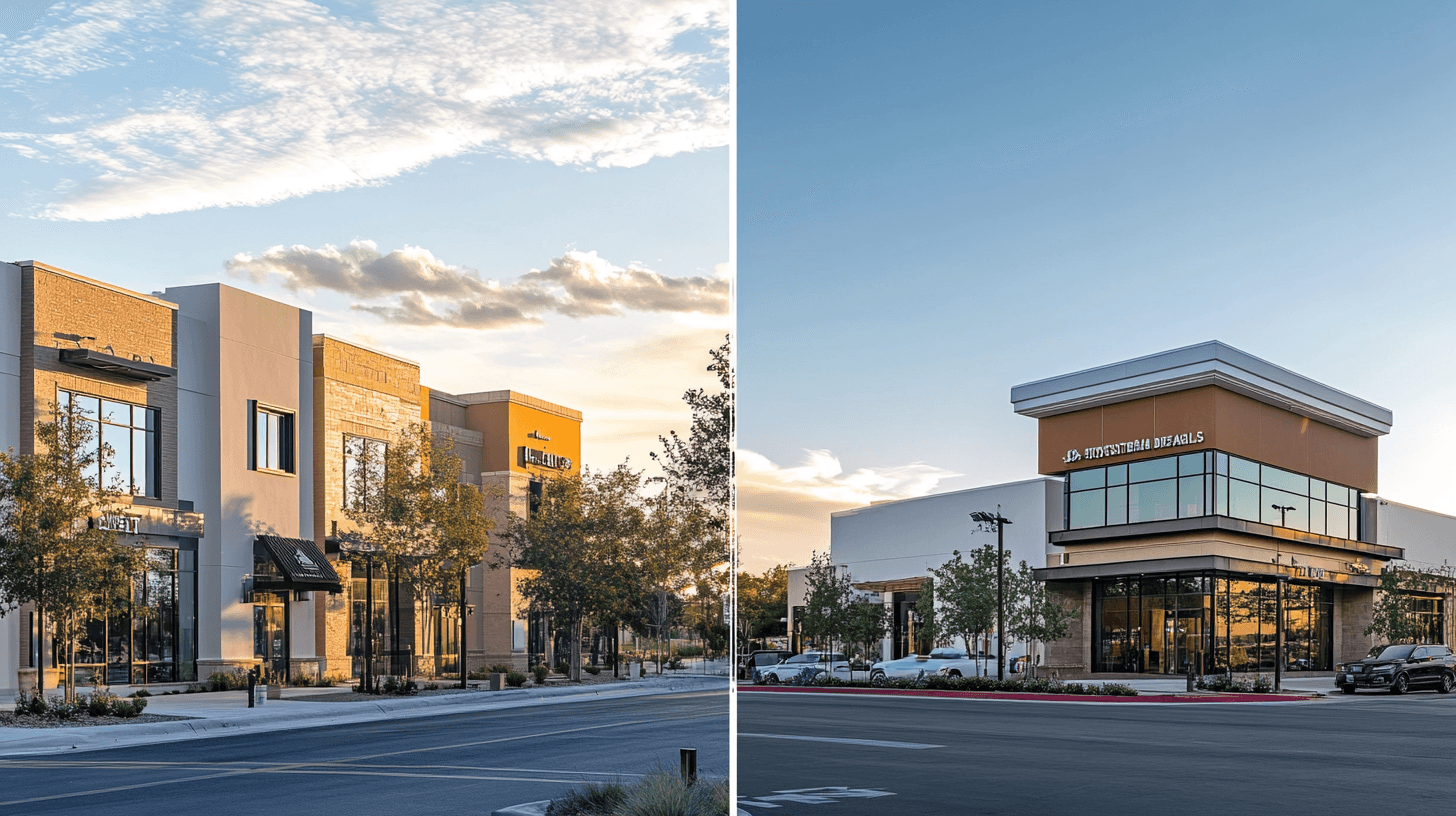
This is the single most expensive marketing decision a DSO will make. And most groups make it by accident.
You acquire a practice. Do you rebrand it under your DSO's name and fold it into your website? Or do you let it keep its identity, its domain, its local reputation?
The answer isn't obvious. And the wrong call can cost you millions in lost SEO equity, patient trust, or operational overhead. I've seen it go both ways across hundreds of multi-location groups. Here's what I've learned.
The Two Models (and the One Everyone Actually Uses)
The industry has names for these approaches:
Branded House: one brand, one website, all locations unified. Think Aspen Dental. Every office looks the same, sounds the same, has the same URL structure. Patients know exactly what they're getting regardless of location.
House of Brands: each practice keeps its own name, its own website, its own identity. The DSO operates behind the scenes. Patients usually don't even know the practices are connected. This is how Heartland Dental runs 1,700+ practices across 38 states, and how Pacific Dental Services operates nearly 1,000 locations in 25 states.
Here's the thing nobody tells you: the two largest DSOs by location count both use the individual brand model. That's not a coincidence.
But before you assume that settles it, let me walk through why it's more nuanced than "just do what Heartland does."
The Case for Keeping Individual Practice Brands
You Preserve Existing SEO Equity
This is the big one. When you acquire a practice that's been operating for 15 years, that practice has:
- A domain with years of authority built up
- Hundreds (maybe thousands) of backlinks
- Google Business Profile history with reviews, photos, and local ranking signals
- Citations across dozens of directories, all with consistent NAP data
Rebranding that practice and redirecting the domain to a page on your corporate site doesn't transfer all of that equity. It transfers some. But you'll lose rankings, you'll lose review continuity on GBP, and you'll confuse the local patients who've been searching for "Dr. Smith's Family Dentistry" for over a decade.
I've seen DSOs acquire a practice doing $200K/month, rebrand it overnight, and watch new patient volume drop 30% in the first quarter. That's not a marketing problem. That's a self-inflicted wound.
Patients Prefer the Local Feel
The data is clear on this: patients overwhelmingly prefer what feels like a local, independent practice over what feels like a corporate chain. When someone searches for a dentist, they want to feel like they're choosing their dentist, not being processed through a system.
Individual branding lets you maintain that illusion (and honestly, if the clinical team stays the same and the care stays the same, it's not really an illusion. It's just smart packaging).
Reputation Risk Is Contained
When Practice A in Dallas has a bad month, a negative review goes viral, a patient complaint gets traction, it stays contained to Practice A. If every location shares a brand, that reputation hit spreads across the entire DSO.
With individual brands, a crisis at one location doesn't tank your Google reviews in every other market.
Acquisitions Are Easier to Close
This is the one that doesn't show up in marketing decks but absolutely matters. Dentists selling their practice care about legacy. They built something over 20 or 30 years. Telling them "we're going to rename it and put it on our website" makes the deal harder. Telling them "your practice keeps its name, your patients won't notice a difference" makes the deal easier.
If acquisition is your growth strategy, and for 41% of DSOs, it is, the individual brand model removes friction from your deal pipeline.
The Case for One Unified Brand
Lower Marketing Costs at Scale
Running 50 individual websites means 50 domains to manage, 50 SSL certificates, 50 site speed audits, 50 content calendars. That overhead adds up fast.
A single branded website with location pages is dramatically simpler to maintain. One design system. One CMS. One analytics setup. One SEO strategy. Marketing teams can move faster and spend less on infrastructure.
Cumulative Brand Recognition
If you're building a consumer-facing dental brand, think Aspen Dental or ClearChoice, you want every dollar of brand awareness to compound. A patient who sees your ad in Chicago and then moves to Phoenix should recognize the name immediately.
With individual brands, every location starts from zero brand awareness. You're never building on top of previous marketing spend. You're starting over in every market.
Cross-Location Patient Trust
Unified brands create a consistency promise. Patients know what to expect. The office in Scottsdale will feel like the office in Tampa. For patients who travel or relocate, that continuity matters.
Simpler Reporting and Benchmarking
When every location runs through the same website and the same marketing infrastructure, comparing performance is straightforward. Cost per patient in Market A vs. Market B. Conversion rates on the Dallas page vs. the Austin page. Same platform, apples-to-apples.
With 50 separate domains, you're stitching together 50 different data sources to get a unified view. It's doable. But it requires serious technology infrastructure.
The SEO Reality: It's More Complicated Than Either Side Admits
Here's where I push back on both camps, because the SEO implications are where most DSOs get the decision wrong.
Individual Sites: The Keyword Cannibalization Problem
If you have three practices in the same metro area, each with their own domain, and all three are targeting "dentist in Phoenix". You're competing against yourself. Three separate sites means three separate SEO budgets trying to rank for the same keywords.
Yes, each site builds its own local authority. But if your locations are close enough geographically, you can end up splitting your own search visibility instead of concentrating it.
Unified Sites: The Thin Content Problem
A single domain with 50 location pages sounds clean, until you realize that most DSOs populate those pages with nearly identical content. Same service descriptions, same copy, different city name plugged in. Google sees that as duplicate content and devalues all of it.
Every location page needs genuinely unique, locally relevant content: local team bios, location-specific patient testimonials, community involvement, neighborhood references. If you're not willing to invest in making each location page substantively different, a unified site will actually hurt your local rankings.
Google Business Profile Matters More Than Either
Here's the truth that makes this whole debate less important than people think: in 2026, your Google Business Profile is doing more heavy lifting for local patient acquisition than your website.
GBP is where patients see your reviews, your hours, your photos. It's where they click to call. It's where 68% of "dentist near me" clicks go. And every location needs its own GBP regardless of whether you use one website or fifty.
The practices dominating local search are the ones with optimized GBPs: complete profiles, consistent review velocity, fresh photos, regular posts. The website architecture matters, but it's not the main event anymore.
What I Actually Recommend
After working with DSOs from 3 locations to 100+, here's my framework:
Keep Individual Brands When:
- You're acquiring established practices with existing SEO equity and patient loyalty
- Your locations are in different markets where local identity matters more than brand scale
- The sellers care about legacy and individual branding makes acquisitions smoother
- You're an IDSO/joint venture model where clinical autonomy is the value proposition
Unify Under One Brand When:
- You're building de novo locations with no existing brand equity to preserve
- You're creating a consumer-facing brand where national recognition is the strategy
- Your locations are geographically concentrated and you want maximum brand density in a market
- Your team can commit to unique, localized content for every single location page
The Hybrid (What Most Smart DSOs Actually Do):
- Keep individual practice brands and domains for acquisitions
- Build a light corporate site that links to individual practices (good for recruiting, investor relations, vendor partnerships)
- Centralize the marketing infrastructure behind the scenes, same call tracking, same CRM, same reporting platform, even though the patient-facing brands are different
- Standardize GBP management, review generation, and ad strategy across all locations regardless of branding
This is the model I see working best at scale. Individual brands on the outside, unified intelligence on the inside.
Where Lasso MD Comes In
This is exactly the kind of problem we built PatientLoop to solve. Whether you're running 5 individual brands or 50, our platform gives you one place to see every location's performance, cost per patient, call answer rates, review velocity, campaign ROI, without forcing you to pick a one-size-fits-all branding strategy.
We work with DSOs like Beacon Oral Specialists (100+ offices across 12 states) where every market is different, every acquisition has its own history, and the marketing strategy needs to flex accordingly. That's not a spreadsheet problem. It's a platform problem. And it's what we built.
If you're navigating this decision, or if you already made it and aren't sure it's working, book a call. I'll walk you through what we're seeing across our DSO portfolio and where the opportunities are in your specific situation.
Pete Johnson is the Cofounder & VP of Sales & Strategy at Lasso MD. He speaks at dental conferences nationwide on DSO marketing strategy, AI, and competitive analysis.
Go deeper: More from the DSO Strategy hub: multi-location marketing, brand architecture, and what breaks when you scale.
Sources
- DSO Marketing: Branded House vs. House of Brands: Cardinal Digital Marketing
- Branded vs. Unbranded DSOs: Weighing the Pros and Cons: Venture Practices
- House of Brands vs. Branded House DSO Structure: Delmain
- 30 DSO Growth Trends for 2026: Clerri (41% of DSOs grow via acquisition)
- U.S. DSO Market Size & Growth: Precedence Research ($155.65B in 2025, $302B by 2035)
- 52 DSOs to Know: 2026: Becker's Dental Review
- Multi-Location Dental SEO: The Franchise Model Without Cannibalization: iMark Infotech
- Local SEO for Dentists: Best Strategies for 2026: LocalMighty
Keep reading
All articlesWant to see this in action for your practice?
Book a free discovery call and I'll run a competitive analysis. On the house.
Book a Discovery Call