Dental Marketing PMS Integration: 10 Questions to Ask Before You Sign
Pete Johnson · As featured in Lasso MD
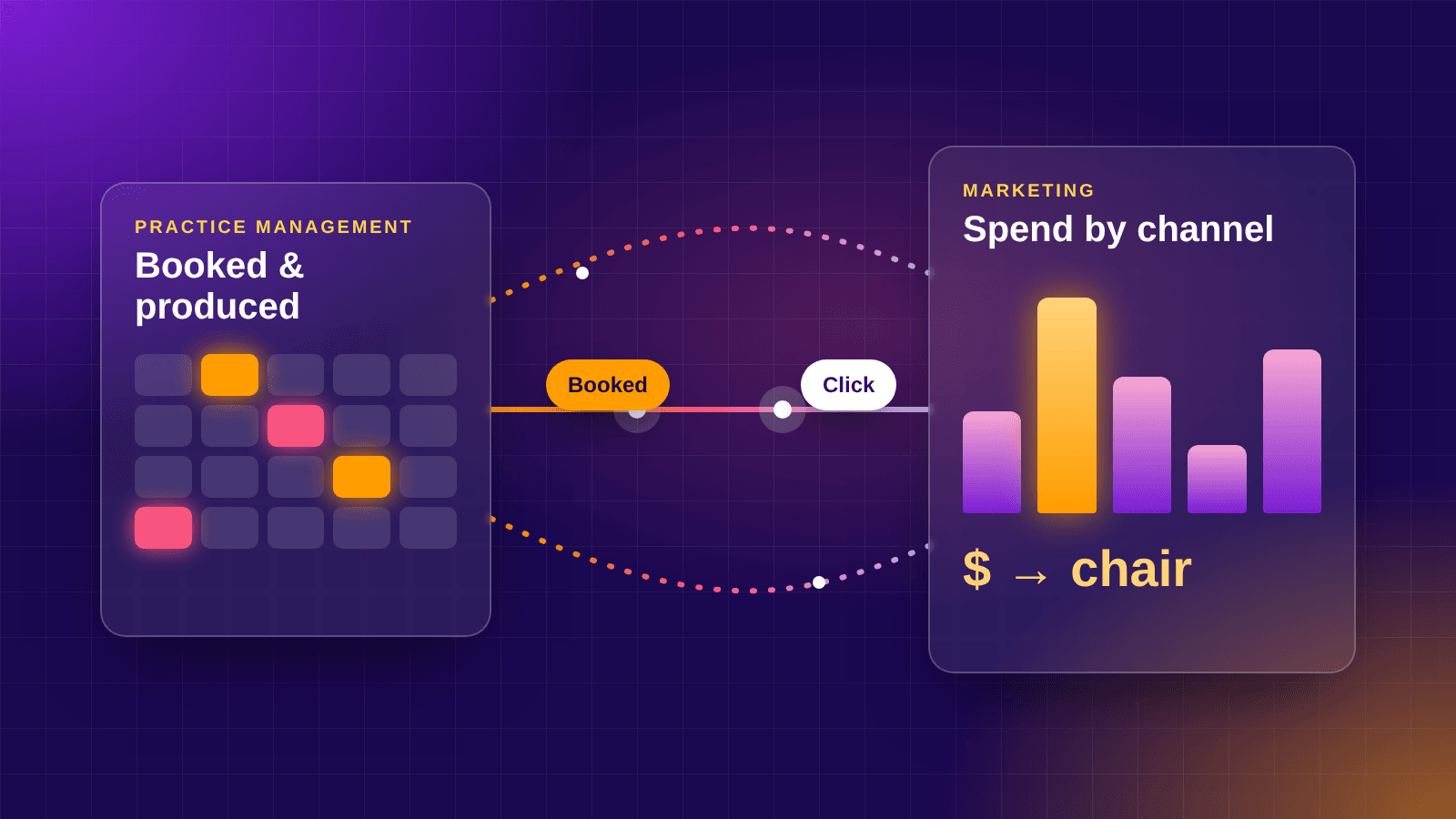
Every dental marketing vendor I compete against now has a slide that says "integrates with your PMS." Some of them mean a native API connection that pulls booked appointments and production by procedure. Some of them mean your office manager exports a spreadsheet once a month. Both get the same logo on the slide.
I just wrote the announcement of PatientLoop's native Dentrix Ascend integration for Lasso MD, so I've spent the last few months deep in exactly how these connections work. That article covers why connecting marketing data to your practice management system matters. This one is the part I'd want if I were the buyer: the questions to ask on the demo, the answers that should make you lean in, and the answers that should make you end the call.
Yes, I sell marketing. That's the point. I know which questions vendors hope you skip.
A real dental marketing PMS integration connects to your practice management software through an official API or an installed sync agent, reads booked appointments and production automatically, and ties each new patient back to the ad, search or call that produced them. If a vendor can't show you one of your own new patients traced from first click to collected production, it isn't integrated. It's reporting.
What does PMS integration mean for dental marketing?
PMS integration means your marketing platform reads data directly from your practice management system (Dentrix, Dentrix Ascend, Open Dental, Eaglesoft and others) instead of relying on someone to type it in or export it. That's the only way to answer the question that matters: which marketing dollars turned into booked patients and paid treatment. Without it, your agency reports clicks and calls, and your PMS reports production, and nobody connects the two.
Here's what the full loop looks like when it works:
- ClickGoogle Ads, Meta, SEO, AI searchMarketing
- Call or formTracked number, lead source capturedMarketing
- BookedAppointment created in the PMSPMS
- ProducedProduction and collections by CDT codePMS
- OptimizedCost per patient and ROAS by channelDecision
Most vendors can show you the first two boxes. The integration question is really asking whether they can show you the last three.
The 10-question PMS integration checklist
Ask these on the demo, in this order. The first four tell you whether the integration is real. The rest tell you whether it's useful and safe.
1. Read access, write access, or both
Ask: "Do you read data from our PMS, write data into it, or both? Exactly which fields?"
Read access pulls information out: appointments, patient status, production, collections, treatment plans. That's what attribution needs. Write access puts information in: an online booking that lands on the schedule, a recall reminder marked as sent, a lead source stamped on the patient record.
A good answer names the fields. A bad answer is "we sync everything." Nobody needs everything, and HIPAA's minimum necessary standard says they shouldn't take it. If they write to your schedule, ask what happens when two systems try to book the same chair at 10 a.m.
2. Which PMS platforms, and how
Ask: "Do you integrate with our PMS specifically, and is it an official API, an installed sync agent, or something else?"
The method depends on the system. Cloud platforms like Dentrix Ascend have official API programs (Henry Schein One runs the Ascend API Exchange and authorizes vendors through it). Open Dental has its own API that the practice enables. Server-based systems like Eaglesoft and classic Dentrix usually connect through a sync agent installed on your office server.
None of those is automatically bad. What's bad is a vendor who can't tell you which one they use for your system, or one that's "in beta" for your PMS. Ask for two current clients on your exact software and call them.
3. A live trace of one real patient
Ask: "Pick a new patient from last month. Show me the ad or search they came from, the call, the appointment, and the production."
This is the whole test. If the integration is real, this takes about 30 seconds on a live dashboard. If you get a sample report with fake data and a promise that "yours will look like this," you haven't seen an integration yet. You've seen a slide.
4. Production, not just appointments
Ask: "Do you report production and collections by procedure, or only booked appointments?"
Appointment counts are Level 1 on the ladder above. They tell you a channel books people. They don't tell you that your Google Ads implant campaign booked four patients worth $90,000 while your Meta campaign booked twenty cleanings. Ask whether they break production out by CDT code or treatment category. That's where budget decisions actually get made.
5. A signed BAA
Ask: "Will you sign a Business Associate Agreement before you touch our PMS data? Who else touches it?"
If a vendor reads patient data, they're a business associate under HIPAA, and you need a signed BAA. No BAA, no integration. Then ask about subcontractors: the hosting provider, the call-tracking platform, any AI tools that process transcripts. I wrote more about where practices get exposed in HIPAA mistakes dental practices make with AI.
6. Historical data on day one
Ask: "When we connect, do you pull historical data, or do we start from zero?"
A vendor that backfills a year of appointments and production gives you a baseline on day one. One that starts from zero means you're three to six months in before you can judge anything, which is conveniently past most cancellation windows.
7. Sync frequency and failure alerts
Ask: "How often does it sync, and what happens when the sync breaks?"
Daily is fine for budget decisions. Monthly isn't. More important is the failure mode: if the agent on your server goes offline after a Windows update, does anyone notice, or do your reports quietly flatline for six weeks? Ask who gets alerted and how fast.
8. Multi-location reporting
Ask: "Can we see each location on its own and rolled up together?"
For a group, this is the question. Blended numbers hide the one office that's burning budget. If you're running more than a handful of locations, read my DSO marketing strategy hub and my guide to choosing a DSO marketing agency before you sign anything.
9. Data ownership if you leave
Ask: "If we cancel, do we keep the attribution history? In what format?"
Your patient data lives in your PMS and stays yours. The joined data, which campaign produced which patient, is the valuable part, and it often lives only in the vendor's platform. Get the export terms in writing. My dental marketing contract red flags post covers the rest of the fine print.
10. Shared access for your other vendors
Ask: "Can our existing agency, consultant or DSO finance team get access to these reports?"
Attribution data that only one vendor can see is a sales tool for that vendor. Attribution data everyone can see is a management tool for you. The better platforms let you invite your agency in, so they can optimize toward booked production instead of clicks.
The scorecard: what a pass and a fail sound like
Print this or pull it up on the call. If a vendor fails three or more, keep shopping.
Red flags that should end the demo
- A logo with no method. They list your PMS but can't say whether it's an API, an agent or an export.
- Attribution runs on the front desk. "Your team just asks how they heard about you." That's a survey, not an integration.
- Reports stop at leads. Clicks, calls and form fills, but nothing about who booked or what they spent.
- No BAA, or "later." Patient data moves before the paperwork does.
- They want the keys to everything. Full database access when attribution needs a handful of fields.
- No live demo on real data. Every screen is a mockup, and "your dashboard will look like this."
If you want the broader version of this conversation (call tracking, cost per patient by channel, LTV to CAC), my dental marketing ROI guide walks through the full measurement setup, and my agency evaluation scorecard covers the non-integration questions.
FAQ
Do I need PMS integration if my agency already does call tracking?
Yes, if you want to know what your marketing produces. Call tracking tells you a channel made the phone ring. PMS integration tells you whether that caller booked, showed up and accepted treatment. Plenty of channels generate calls that never turn into production, and you can only see that with both data sets connected.
Which practice management systems can connect to marketing platforms?
Most major dental PMS platforms can connect, but the method varies. Cloud systems like Dentrix Ascend use official APIs, Open Dental offers an API the practice enables, and server-based systems like Eaglesoft and Dentrix typically connect through a sync agent installed on the office server. Some platforms support dozens of systems; PatientLoop, for example, lists more than 40. Always confirm your exact PMS and version.
Is it safe to give a marketing vendor access to my PMS?
It can be, with the right controls. The vendor should sign a Business Associate Agreement, connect through an official API or a secure agent rather than manual exports, and pull only the fields attribution needs. Ask who their subcontractors are and how data is encrypted. If they can't answer clearly, don't connect.
How long does a dental PMS integration take to set up?
For a cloud PMS with an official API, connecting is often a matter of days once you authorize the vendor. Server-based systems that need a sync agent installed can take longer because someone has to set it up on your office server. Ask whether the vendor backfills historical data, which gives you useful reports right away instead of months later.
What's the difference between attribution and reporting?
Reporting tells you what happened in one system: clicks in Google Ads, calls in your tracking platform, production in your PMS. Attribution connects them, so you can say a specific campaign produced a specific patient and a specific dollar amount. Integration with your PMS is what turns reporting into attribution.
The bottom line
"Integrates with your PMS" is the new "we do SEO." Everyone says it, and it means wildly different things. Ten questions and one live patient trace will tell you which kind of vendor you're talking to.
If you want to see what a native Dentrix Ascend connection looks like in practice, the PatientLoop and Dentrix Ascend write-up shows the data it pulls and the questions it answers.
Keep reading
Want to see this in action for your practice?
Book a free discovery call and I'll run a competitive analysis. On the house.
Book a Discovery Call